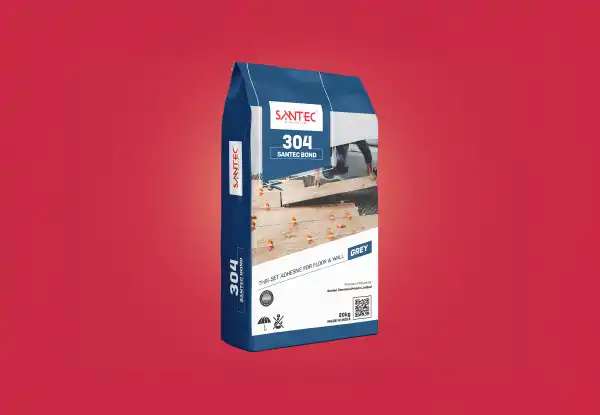
Santec Bond 304
20 KGPolymer-based adhesive for small and medium tiles on interior floors and walls.
View details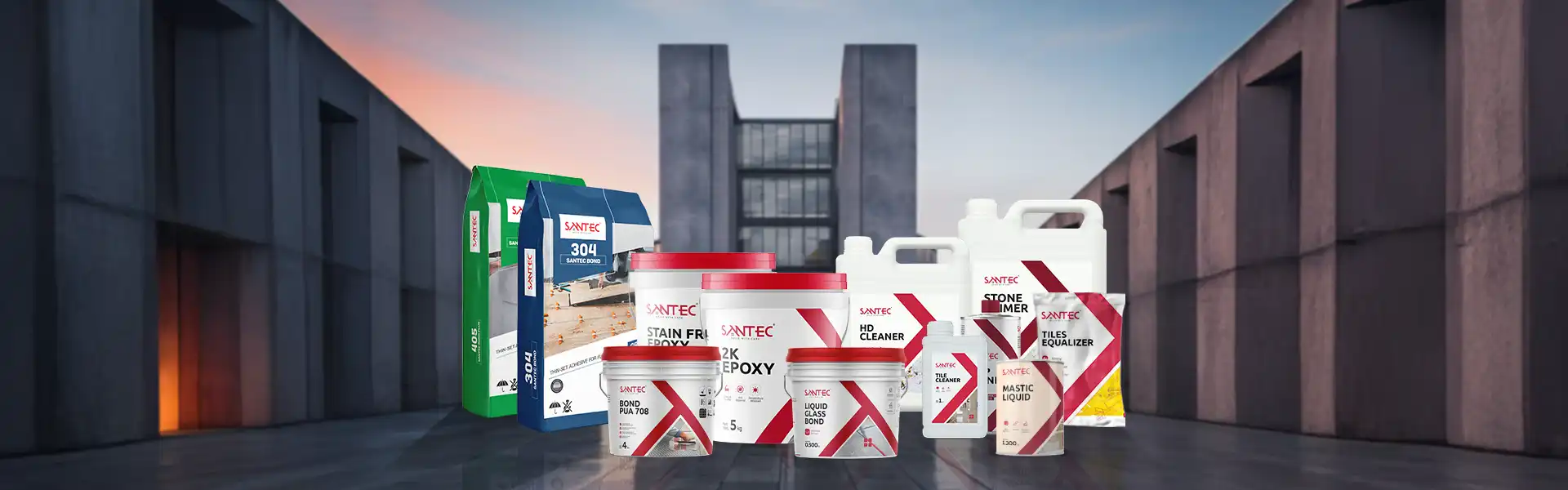
Polymer-based adhesive for small and medium tiles on interior floors and walls.
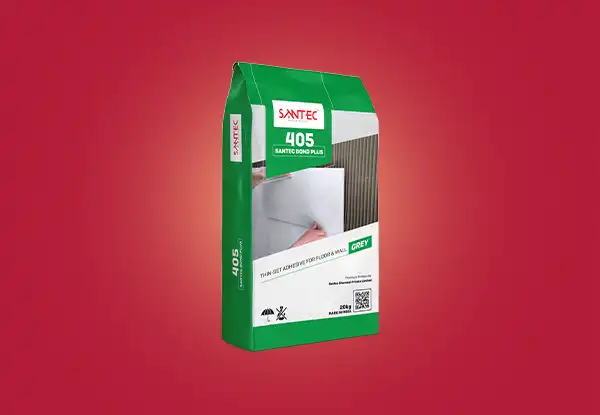
View detailsPolymer-modified C2TE adhesive for tiles and natural stone in dry and wet interior areas.
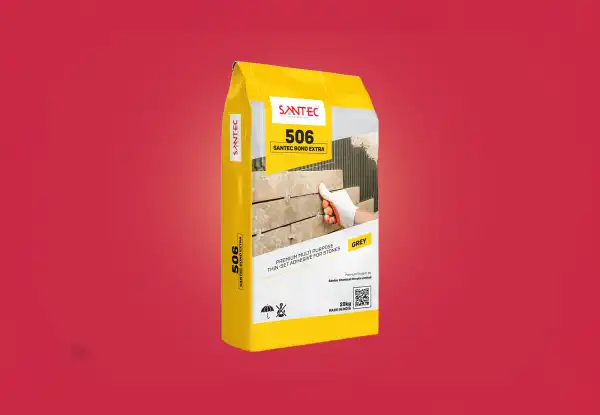
View detailsAdhesive for tiles and natural stone on exterior walls, plaster and concrete.
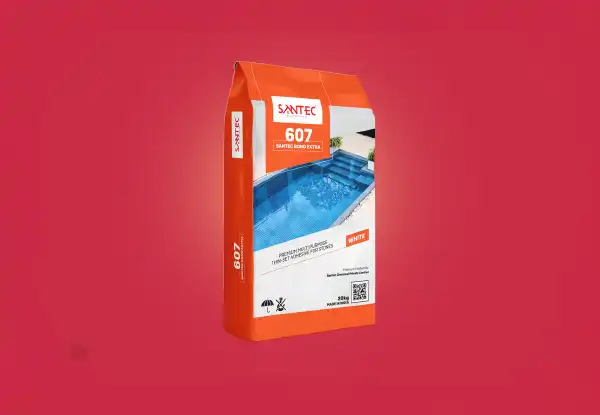
View detailsWhite adhesive for mosaic, marble and pools, with strong wet-area bond.
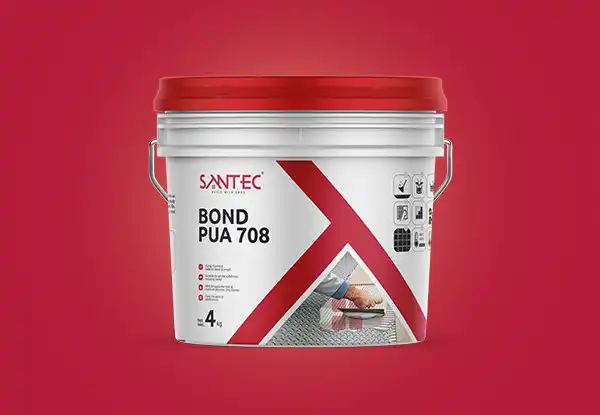
View detailsTwo-component polyurethane adhesive for tiles and stone on most surfaces.
View detailsSantec’s tile adhesive range covers everyday ceramic and vitrified tile installation, large-format slabs, exterior applications, marble, mosaic and moisture-sensitive materials. The best tile adhesive for a project depends on more than tile size: the substrate, wall or floor location, interior or exterior exposure, wet-area conditions and required working time all matter. A C2 adhesive provides improved cementitious performance for many standard installations. C2TES1 products add reduced slip, extended open time and deformability for demanding work. Reactive polyurethane adhesive is intended for special substrates and materials that need a non-cementitious bond.
| Product | Class | Tile or finish | Typical area | Coverage / pack |
|---|---|---|---|---|
| Bond 304 | C2 · Type 2 | Ceramic and vitrified tile | Interior floor and wall | 55–60 sq ft at 3 mm · 20 kg |
| Bond Plus 405 | C2TE · Type 2 | Vitrified tile, mosaic and stone | Interior floor and wall, dry and wet areas | 55–60 sq ft at 3 mm · 20 kg |
| Bond Extra 506 | C2TES1 · Type 3 | Large-format tile and stone | Interior and exterior | 55–60 sq ft at 3 mm · 20 kg |
| Bond Extra 607 White | C2TES1 · Type 3 | Marble, mosaic and light finishes | Interior, exterior and wet area | 55–60 sq ft at 3 mm · 20 kg |
| Bond PUA 708 | R2T · Type 5 | Moisture-sensitive tile and stone | Special substrates | Refer to TDS · 1 kg / 4 kg |
For common interior ceramic or vitrified tiles, begin with a C2 product and check the permitted tile size and substrate on the technical data sheet. Large-format tiles create greater stress and require careful surface preparation, suitable trowel selection and full adhesive contact. Exterior walls, balconies and areas exposed to temperature changes need a grade designed for those conditions. Marble and translucent finishes may need a white adhesive to protect appearance.
Wall installations need control of slip, while floors depend on bed coverage and substrate flatness. Wet areas require the complete system: appropriate waterproofing below the tile, a compatible adhesive and suitable grout. Tile-on-tile, metal, wood and moisture-sensitive stone should never be treated as ordinary cementitious applications; consult the product TDS or Santec technical team before work begins.
Bond 304 is a C2 option for many interior vitrified-tile installations. Larger formats, exterior work and demanding conditions may require Bond Extra 506 or another C2TES1 product.
White adhesive is commonly selected for marble, mosaic, light-coloured finishes and installations where a grey base could affect the final appearance.
R2T identifies an improved reactive resin adhesive with reduced slip. Bond PUA 708 is listed as an IS 15477 Type 5 R2T polyurethane adhesive.
Not always. Exposure, substrate movement, temperature, tile size and moisture affect the correct choice. Check the current technical data sheet for the intended area.
Start with the published product coverage, then account for trowel size, substrate flatness, tile profile and workmanship. Actual site consumption can vary.
Use Santec Bond Extra 506 or Santec Bond Extra 607 White. Both are C2TES1 (IS 15477 Type 3) and rated for interior and exterior floors and walls. Santec Bond 304 and Bond Plus 405 are interior only.
Santec Bond Extra 506 or Santec Bond Extra 607 White, because both have excellent underwater shear bond. Choose white Santec Bond Extra 607 White for glass mosaic and light tiles.
Santec Bond PUA 708, a two-component polyurethane adhesive (IS 15477 Type 5, R2T) that bonds to wood, plywood, metal, gypsum board, PVC and existing epoxy floors.